

The COVID-19 pandemic caused profound economic, social and human loss for Australians. Despite this loss, however, it has not created a culture of remembrance from Australia’s national institutions.
The silence is not accidental.
Pandemic deaths were lonely, medicalised and preventable.
COVID-19 “vaccine” deaths were especially so, yet they continue to be ignored by the legacy media, government and the national institutions that are responsible for shaping the nation’s collective memory about the pandemic.
So, why is Australia so keen on forgetting the pandemic?
Where are Australia’s pandemic memorials or commemorations?
There is scant evidence that any public commemorations have occurred or are being planned in Australia.
The Department of Prime Minister and Cabinet has the responsibility for “support[ing] and coordinat[ing] ceremonial and state occasions involving the Prime Minister, including State Funeral and Memorial Services, Ceremonial Welcomes at Parliament House, official hospitality in association with the Prime Minister’s XI Cricket Match, and events of national significance” [emphases added], yet Australia does not have a national day of commemoration for Australia’s many COVID-19 pandemic victims.
The National Archives of Australia has explicitly called COVID-19 “a significant event in world history” and has instructed Commonwealth agencies to identify and preserve COVID-related records that may warrant permanent retention as national archives. Similarly, the National Museum of Australia has been “developing a collection of objects and ephemera relating to the COVID-19 pandemic in Australia” since 2020.
So, the archival and museum arms of the Commonwealth have already treated the pandemic as an historically exceptional national event, while the civic-commemorative side has, so far as we can establish, not produced an equivalent national physical memorial or annual remembrance day.
The international examples
There are several international examples of COVID-19 memorials or commemorations that have started as grassroots movements, which have later been adopted by national institutions that could provide the framework for what this could look like in Australia.
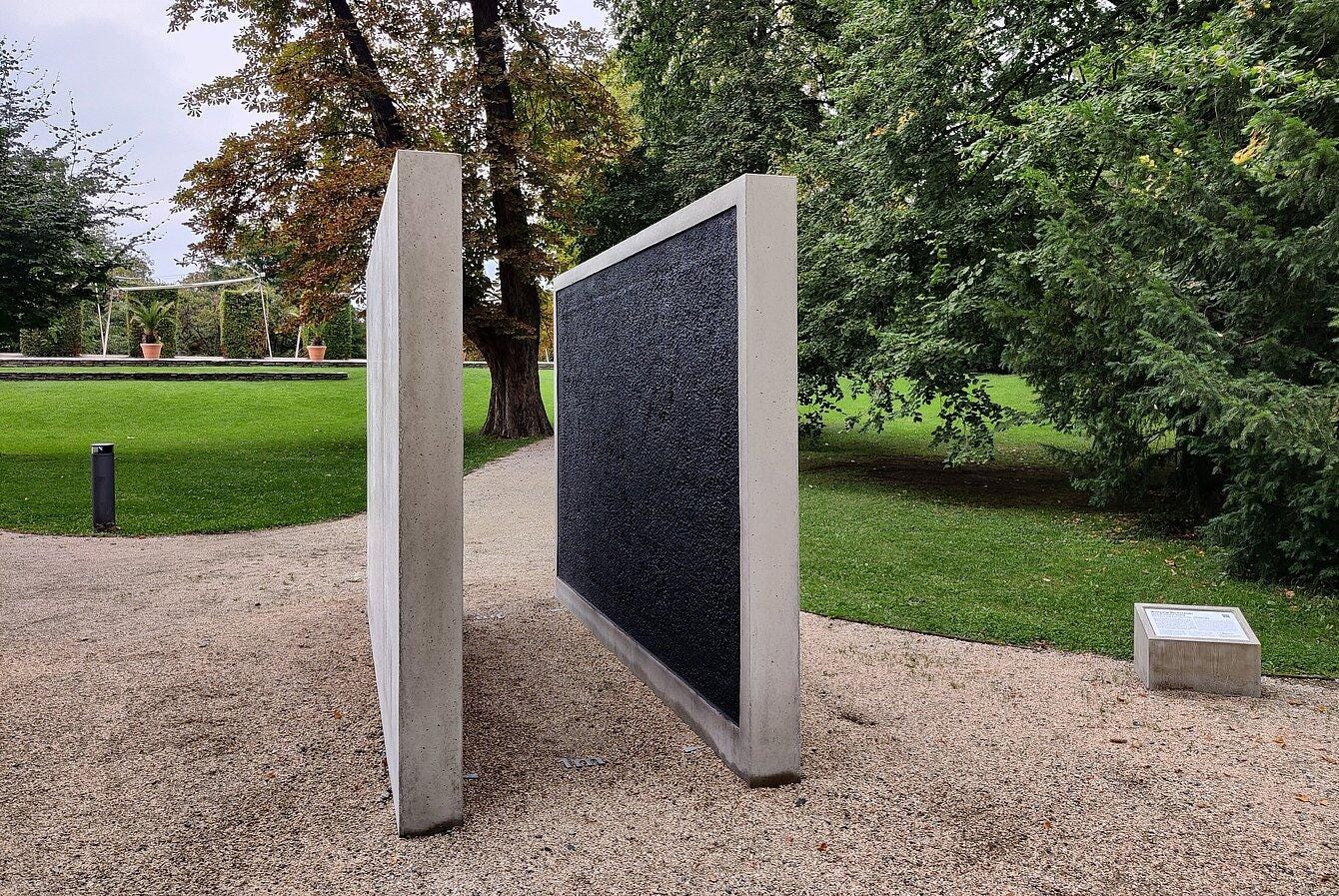
In April 2020, very early in the pandemic, a memorial was commissioned by the Austrian Province of Styria and the Institute for Art in Public Space to commemorate COVID-19’s impacts, resulting in three confronting monuments which critiqued social-distancing, selective memory and fractures caused by the pandemic policies:
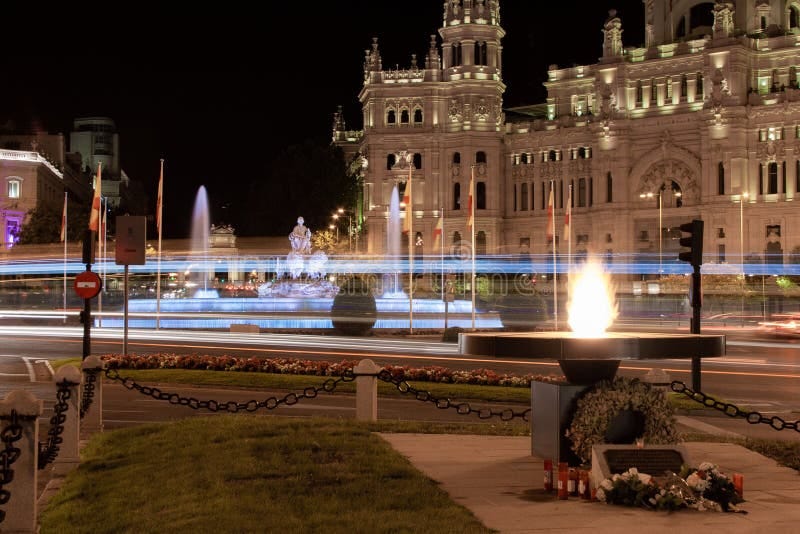
By May 2020, also very early in the pandemic, on the feast day of Spain’s patron Saint Isidro, the “Cibeles COVID-19 Memorial in Madrid” was inaugurated outside the Madrid City Hall. It consists of an eternal flame with the inscription “Your flame will never be extinguished in our hearts.”:
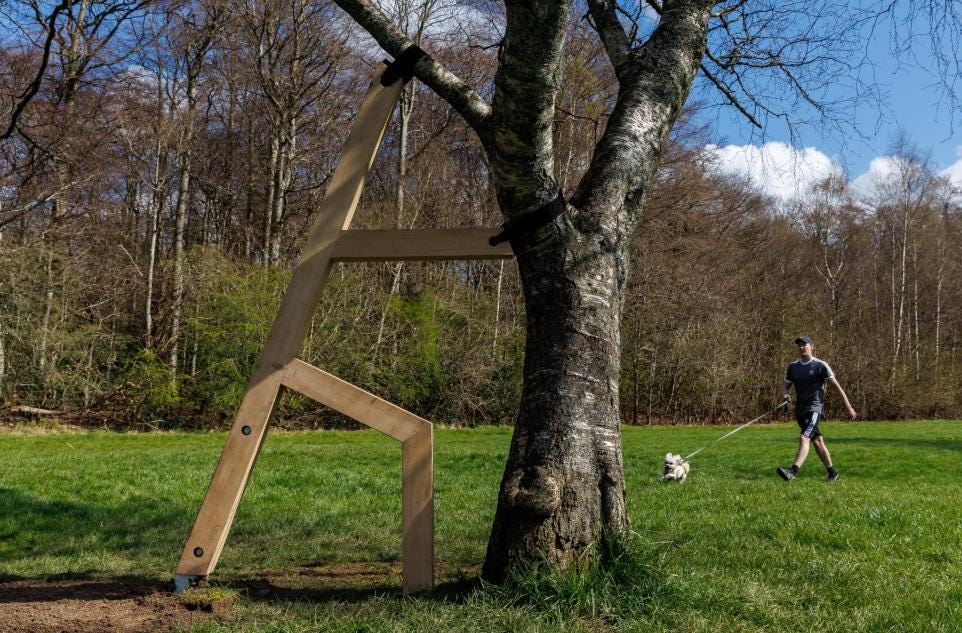
Also in 2020, the Scottish Government co-funded the creation of a COVID-19 memorial in Pollok Country Park, consisting of 40 oak tree supports in what was described as a “living memorial”. The functional-looking timber structures were designed to reflect human poses of support:
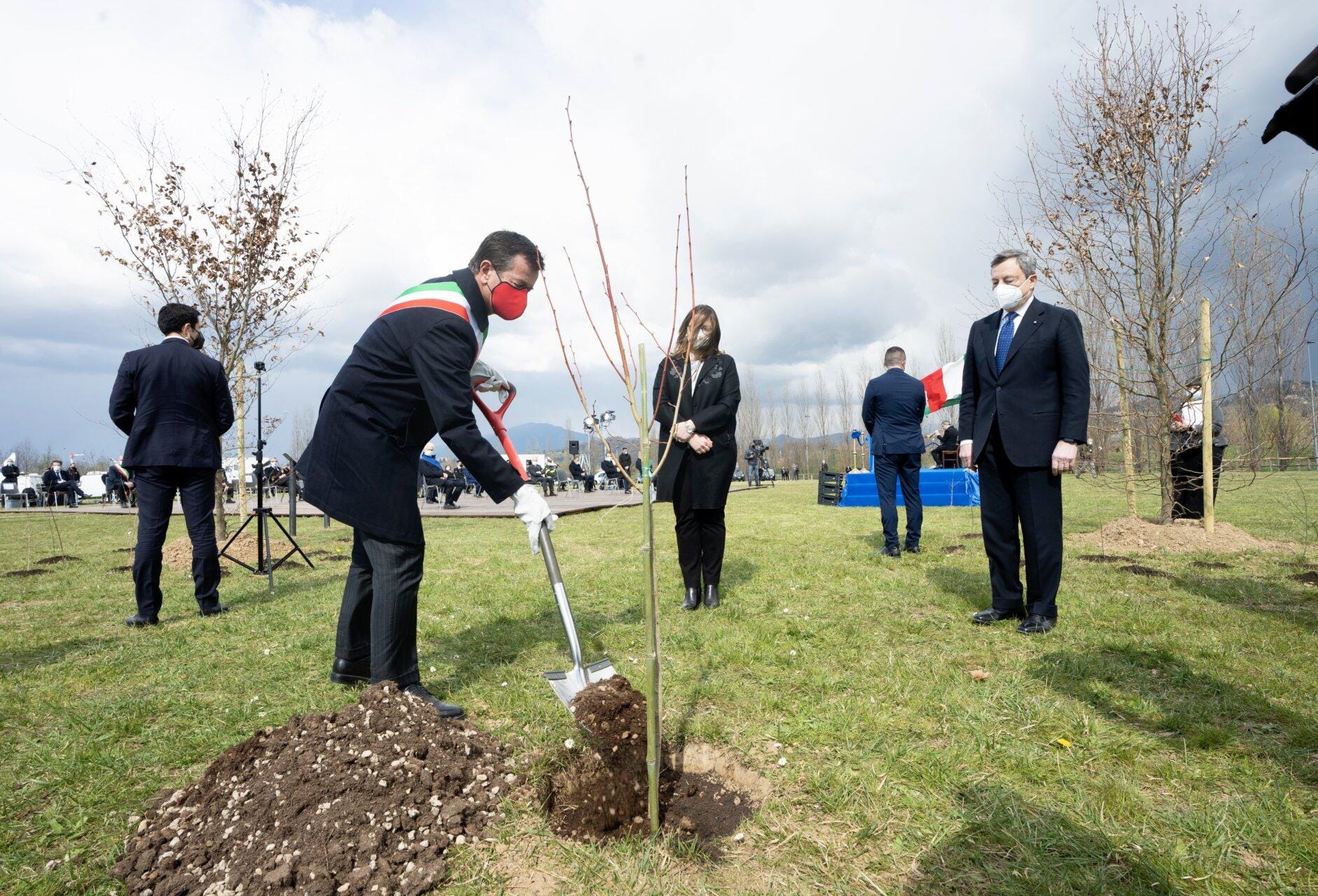
Similarly, in 2021, coinciding with the first anniversary of Italy’s COVID-19 outbreak, the “Bosco della Memoria” was established in Bergamo, Italy, to commemorate the victims of its COVID-19 response:
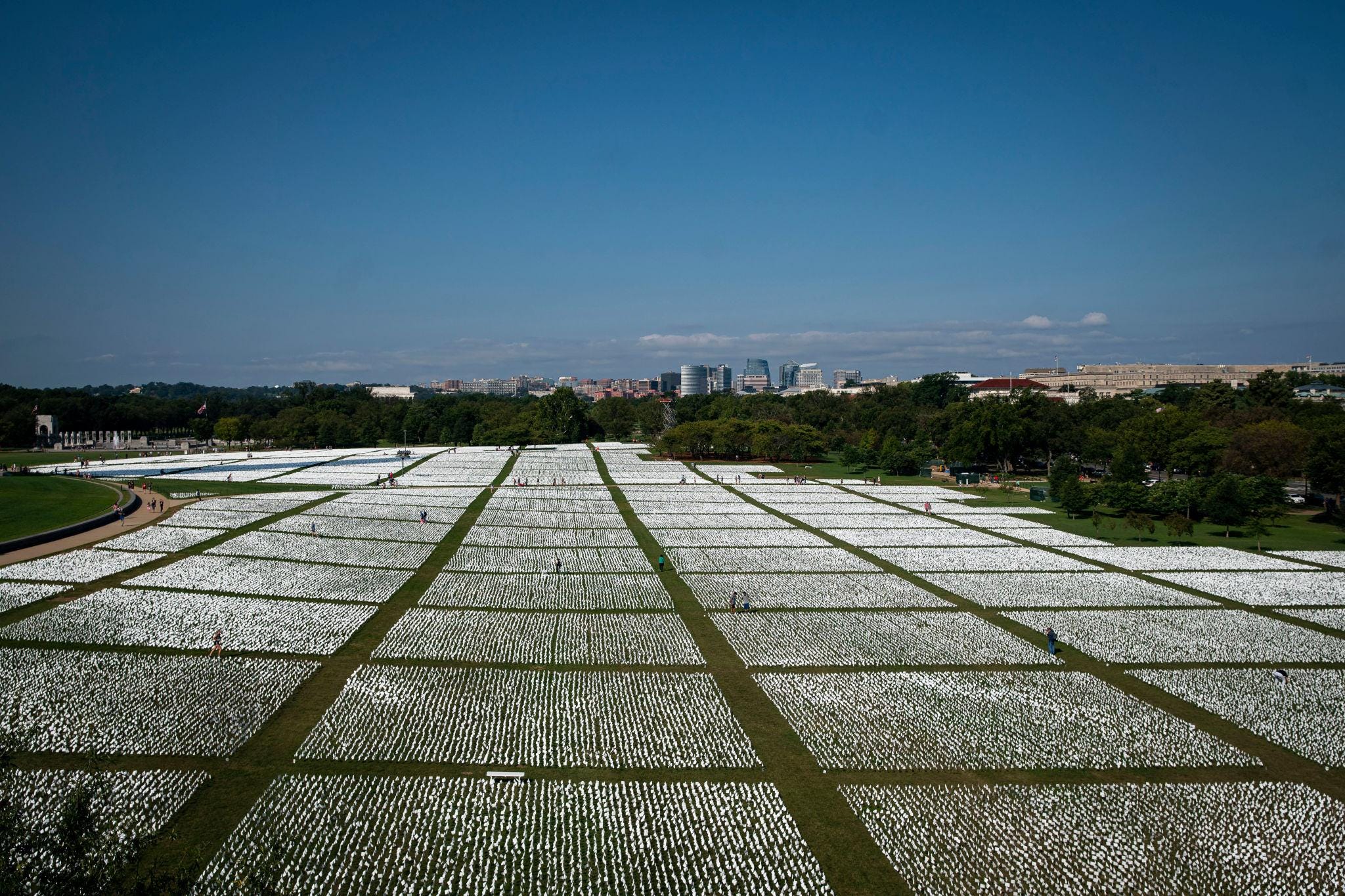
In yet another example, 700,000 small white flags were placed in the National Mall in Washington DC in 2021, to commemorate the estimated number of USA “COVID-19 deaths” at the time (the installation was later converted into a display in the National Museum of American History):
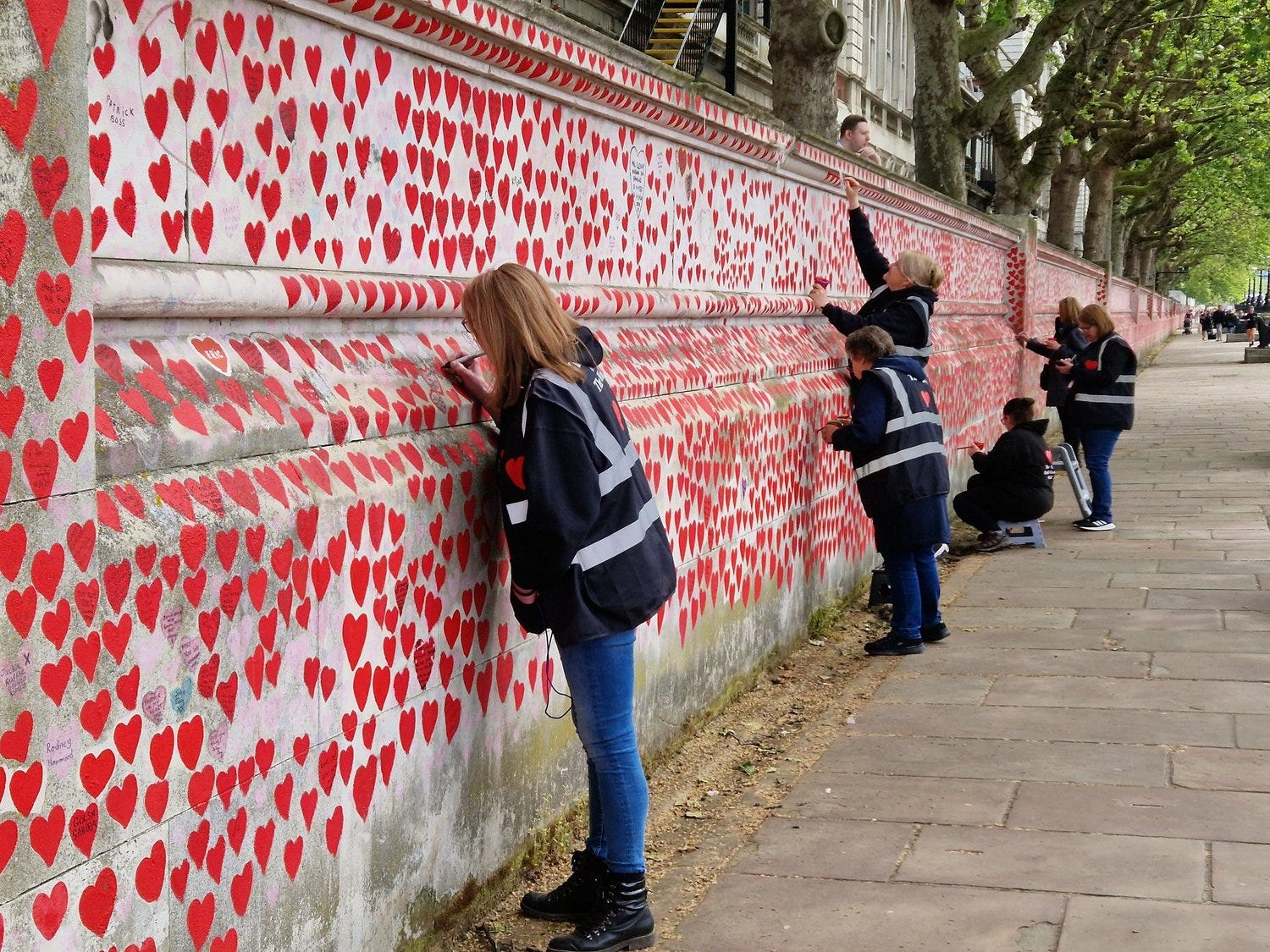
London’s “National COVID Memorial Wall”, created in March 2021 by over one thousand volunteers who hand-painted red hearts for all the UK’s COVID-19 victims at the time, with messages penned by bereaved family members inside these hearts, was officially adopted by the UK Government in November 2025 when it committed to preserving it as a permanent memorial:
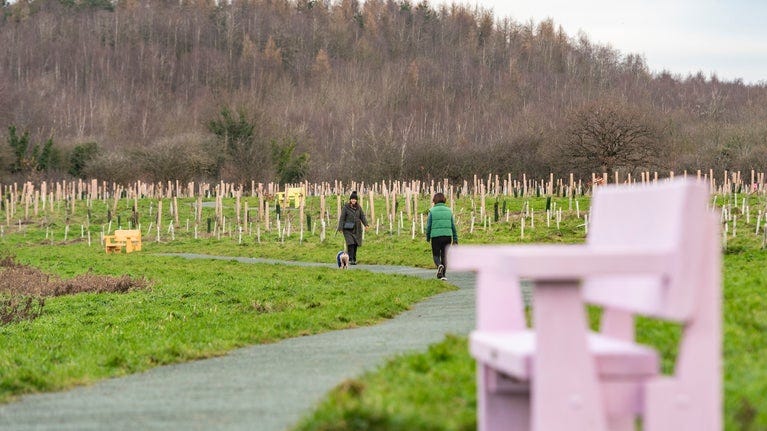
And in Wales, the National Trust Cymru established commemorative woodlands in North Wales to serve as a “living memorial to those who lost their lives to COVID-19 and act[ed] as a symbol of Wales’ resilience during the pandemic”:
Digital memorials also exist, such as those from India, Malaysia, or South Africa providing photographs and biographies of believed COVID-19 victims, however defined.
This is not an exhaustive list of the many memorials and commemorations of the COVID-19 pandemic, but it does shine a light on the curious absence of similar national memorialisation or commemoration in Australia, especially now that six years have passed since the first lockdown of March 2020.
Pause for reflection
Sufficient time has passed for us to reflect on the COVID-19 experience in Australia and, like many of these international examples allow, critically analyse what went very wrong to ensure that we do not allow the same mistakes to be made again.
These international examples of the memorials and commemoration are provocative in that they invite the viewer to reflect on the harmful and illiberal policies that represented government overreach.
These are not simply memorials about honouring the dead. They determine how an event like COVID-19 enters and stays in the collective memory. A memorial says “this event happened; these people mattered; this event deserves continuing reflection”. Australia’s continued absence of memorialisation permits the pandemic to be forgotten and its thousands of victims to continue to be neglected.
A serious pandemic memorial should not prescribe one approved interpretation of what happened. It could provide space to remember people who died, people separated from relatives, people in aged care, healthcare workers, businesses and livelihoods lost, children whose schooling was disrupted, families separated by borders, people harmed by medical interventions or public policy including “vaccine” mandates, and the “vaccine” injured. That allows commemoration to encompass both loss caused by COVID-19 and, loss associated with the pandemic response.
Australia’s grassroots response: “Forest of the Fallen”
Like many of the international grassroots movements cited in this article which spawned national memorials, Australia has its own grassroots movement; the “Forest of the Fallen”.
The “Forest of the Fallen” is a travelling, temporary public display in multiple locations in Australia of laminated pages on stakes placed in the ground telling the story of an individual who has died or experienced serious health problems following COVID-19 “vaccination”:
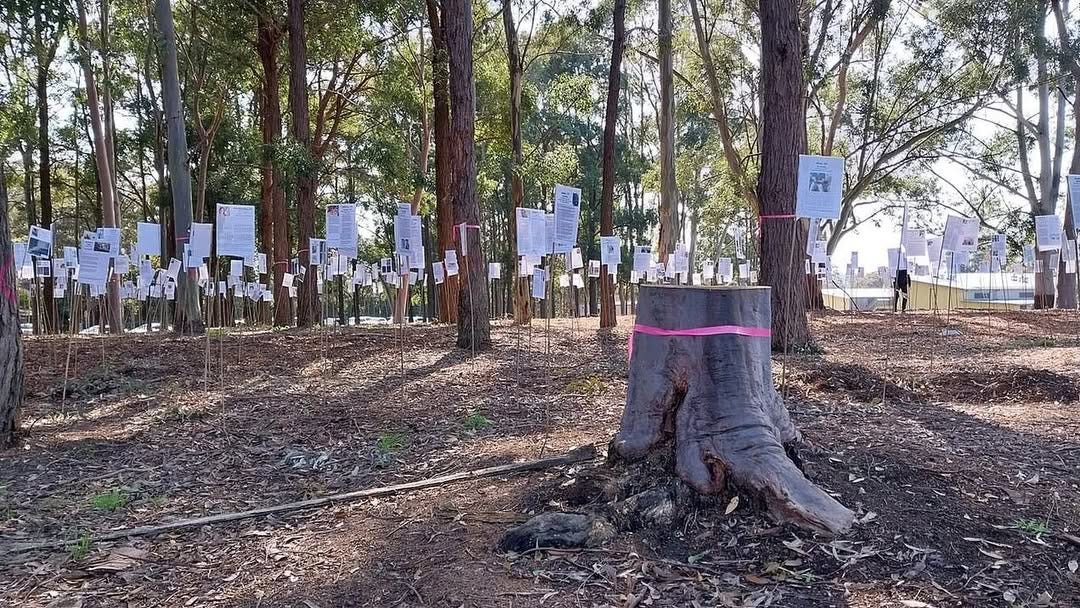
The organisers of “Forest of the Fallen” maintain that their displays are neither a “protest” nor a “database”; rather, that they are the public domain stories of all COVID-19 “vaccinated” people who have experienced death or injury following their “vaccination”. At their webpage, the organisers simply thank viewers “for not looking away”.
Unlike the international examples covered in this article, Australia’s “Forest of the Fallen” has either been ignored by Australia’s legacy media or tarnished with the “anti-vaccine” brush designed to silence any legitimate debate or reflection called by these installations.
Disappointingly, these installations have not been been adopted or co-opted by any of Australia’s national institutions responsible for shaping our collective memory of the pandemic and the pandemic response.
Conclusion
Australia requires a national COVID-19 memorial that represents all victims of the pandemic and the pandemic response.
COVID-19 remembrance matters because it converts an event from something simply recorded into something publicly confronted. It gives people a place to mourn, but also a place to think critically about decisions, consequences and competing experiences.
If we allow this culture of forgetting to perpetuate, we will continue to reduce human suffering to a body count of “COVID-19 deaths” which neglects the deleterious consequences of COVID-19 policies imposed by the States and Territories.
We need more than a monument; we need a public mechanism for remembering and interrogating what happened.
Perhaps the most revealing thing about Australian pandemic memory is not what we have chosen to commemorate, but what we have so far declined to confront publicly.
The Australian government has no wish to recall or commemorate a time when masks went on and some came off.